

SCIENCE
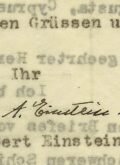
IN 1948, JUST A SHORT 6 MONTHS AFTER THE FOUNDING OF THE STATE OF ISRAEL, EINSTEIN WRITES TO A POST-HOLOCAUST SURVIVOR STAYING IN AN AMERICAN-JEWISH DISTRIBUTION CAMP IN CYPRUS, WHILE AWAITING HIS RESETTLEMENT IN THE NEW ISRAELI STATE, AND ACKNOWLEDGES:
“WE ALL OWE THE SMALL HEROIC GROUP OF OUR BROTHERS IN ISRAEL GRATITUDE AND ADMIRATION BECAUSE THEY HAVE ACHIEVED ON THEIR OWN THAT WHICH IS THEIRS BY RIGHT”
EINSTEIN, ALBERT. (1879-1955). Theoretical physicist; Developed the general theory of relativity. Outstanding Typed Letter Signed “A. Einstein”. 1 1/4 pages, quarto. [No place], November 24, 1948. In German. To Siegfried Hessing, Polish writer and Jewish Internee in Famagusta, Cyprus. Addressed to “Camp 67 Bg c/o A.J.D.C.”, a post-Holocaust location where Jews were awaiting permission to enter the new nation of Israel.
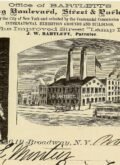
JOSEPH BARTLETT PENS A LETTER ON HIS STUNNING BARTLETT STREET LAMP COMPANY LETTERHEAD
BARTLETT, JOSEPH WEATHERBY. (1835-1902). American inventor of both sewing machines and street lamps; received patents on sewing machines in 1865, 1868, and manufacturer of Bartlett Street Lamps [circa 1870]; his economical street lamps were used throughout New York City as well as in Troy, New York. Exceedingly scarce Autograph Letter Signed, “J.W. Bartlett,” on his fabulous illustrated Office of Bartlett’s Reflecting Boulevard, Street & Park Lamps letterhead. Two separate pages, octavo. “619 Broadway, N.Y.” “Nov[ember] 11, 1876.”

SIR HUMPHREY DAVY SENDS THE ADDRESS OF SIR THOMAS BERNARD, NOTED PHILANTHROPIST, TO SAMUEL TAYLOR COLERIDGE, THE BRITISH POET AND PHILOSOPHER
DAVY, SIR HUMPHREY (1778-1829) British chemist and inventor. Autograph Note Signed, “H. Davy.” One page, octavo. No place. “June 10th 1807”.
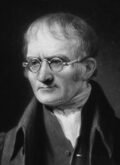
JOHN DALTON TO HIS FORMER SCHOOL MASTER, JOHN FLETCHER, THE PERSON WHOM ENCOURAGED DALTON’S EARLIEST INVESTIGATIONS AND HIS STUDY OF MATHEMATICS AND SCIENCE
DALTON, JOHN. (1766-1844). British chemist, physicist, and pioneer meteorologist; best known for introducing the atomic theory into chemistry, and for his research into color blindness, sometimes referred to as Daltonism; published “On the Absorption of Gases by Water and other Liquids” (first read as a lecture on 21 October 1803, first published in 1805) — which contained his law of partial pressures now known as Dalton’s law. Exceedingly Scarce Autograph Letter Signed, “John Dalton”. Two full pages, quarto. Manchester, February 9, 1822. Fine condition.
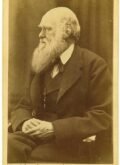
EXTREMELY-RARE SIGNED DARWIN PHOTOGRAPH — ALSO SIGNED ON THE VERSO BY CONTROVERSIAL PHOTOGRAPHER OSCAR REJLANDER, WHO TOOK THIS CDV IMAGE AND WHOSE PHOTOGRAPHS ILLUSTRATED DARWIN’S THE EXPRESSION OF THE EMOTIONS IN MAN AND ANIMALS
DARWIN, CHARLES. (1809-82). British scientist and founder of evolutionary theory. Superb and Exceedingly-rare Signed Carte-de-Visite Photograph. Darwin is depicted [in a clear 1st generation print], showing him seated in 1/2 length pose, facing right, with his hands clasped in front of him. Boldly signed on the lower margin, “Charles Darwin.” No place, [London]. No date [circa 1871]. Also signed on the verso by OSCAR GUSTAVE REJLANDER (1813- 1875), the Victorian art photographer, who took this photograph: “O.G. Rejlander / 1 Albert Mansions, / Victoria Street S.W.”
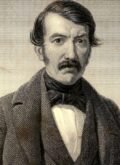
WRITTEN FROM THE INTERIOR OF AFRICA, DR. DAVID LIVINGSTONE THANKS A YOUNG LADY FOR HER PRAYERS FOR HIS CONTINUED SUCCESS AND SPEAKS OF HIS CONVERTING THE NATIVE AFRICAN POPULATION TO CHRISTIANITY: “PAUL IS ONE OF THE FIRST CONVERTS OF THE KURUMAN [TRIBE] AND LATELY JOINED US. MELROSE HAS ALWAYS BEEN MY COMPANION A HARD WORKER & AN UPRIGHT MAN.”
LIVINGSTONE, DAVID. (1813-1873) Pioneer medical missionary and African explorer; best known for his explorations and having been ‘found’ by journalist Henry Stanley. Important Partial Autograph Letter Signed, “David Livingston”.
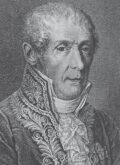
ALLESANDRO VOLTA ~~ THE INVENTOR OF THE BATTERY
SENDING METAL “PLATES” OR COMPONENTS OF HIS ‘VOLTAIC PILE’ TO A SCIENTIFIC COLLEAGUE!
VOLTA, ALLESANDRO (1745-1827) Italian physicist, chemist and pioneer of electricity research; best known for the development of the first electric cell [battery] in 1800. Exceptional Autograph Letter Signed, “A. Volta”, in Italian. One full page, quarto. Milano, April 14, 1813.